



The Feedback Loop Advantage: How AI Is Turning Product Strategy Into a Living System in 2025
Something subtle but profound is happening in the world of product strategy. It’s not loud, and it’s not the sort of shift captured in press releases. Yet it’s reshaping how high-performing teams build, learn, and compete.
AI has changed product strategy not by adding new features, but by rewiring how strategy itself works. What used to be a static roadmap has become a living system—constantly learning, adapting, and compounding value. In 2025, the strongest strategies aren’t built through top-down planning. They grow through continuous feedback loops powered by data, models, and real-time signals.
This isn’t the AI-powered future people imagined a few years ago. It’s more profound, more operational, and far more transformative.
This Era Isn’t About Smarter Products—It’s About Smarter Strategy
A decade ago, strategy meant choosing direction, defining priorities, and placing long-range bets. Those activities still matter, but they no longer represent the edge. AI has shifted the emphasis from prediction to adaptation. The strongest product strategies in 2025 work like organisms: sensing, responding, and evolving in near-real time.
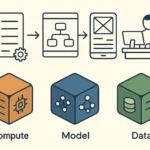
Three forces are driving this evolution:
-
Data streams replace static assumptions.
Teams no longer rely on quarterly research or lagging metrics. Instead, they treat the product as a sensor network. Every click, drop-off, anomaly, and success path becomes a strategic input. -
Models interpret complexity that humans can’t see.
AI systems uncover patterns invisible to roadmap discussions—latent needs, misaligned flows, and underserved segments that only emerge through aggregate behavior. -
Compute gives strategy a heartbeat.
Real-time inference transforms the strategy from something reviewed monthly to something continuously renewed.
Together, these forces create a strategy engine that learns as fast as the environment changes.
Roadmaps Are Becoming Strategic Theories
Traditionally, a roadmap was a commitment. In 2025, it’s a theory: a working hypothesis about how value will compound over time. Like any theory, it’s meant to be tested—continuously.
A new strategic loop is emerging:
-
Start with a hypothesis about customer value
-
Instrument the product to observe behavior
-
Allow models to detect signal shifts
-
Adjust the roadmap based on what the system learns
-
Repeat
It’s a loop, not a timeline.
Teams that embrace this outperform those who cling to static plans. They detect weak signals early. They catch value migrations before competitors do. They change direction with precision instead of panic.
Product Value Now Emerges From Three Core Layers
Modern products deliver value through an integrated trio:
1. Data Quality and Signal Strength
AI is only as strong as the signals it learns from. High-performing teams invest in robust data pipelines, quality gating, and strict definitions of signal health. They understand that insufficient data doesn’t just lead to bad predictions—it leads to bad strategy.
2. Model Behavior and Evolvability
Models are no longer static components. They behave, adapt, and evolve. Teams treat them as living assets that require:
-
evaluation
-
tuning
-
guardrails
-
ongoing monitoring
This makes model behavior a strategic concern, not just a technical one.
3. Compute Efficiency and Real-Time Capability
Latency, throughput, and cost structure increasingly shape the product experience. Compute has become a design constraint—and for teams who understand it, a competitive advantage.
These layers turn product strategy into something grounded in reality rather than assumptions.
The Rise of the Adaptive PM
Product leaders are shifting roles. They’re becoming less like feature owners and more like system stewards. The Adaptive PM focuses on:
-
signal quality
-
model alignment
-
learning loop velocity
-
guardrails and ethical considerations
-
real-time system behavior
They’re not trying to master everything—they’re orchestrating everything. Their job is to ensure the strategy keeps pace with what the product is learning.
Why This Matters Now
User expectations are rising. Markets are shifting faster. Competition can emerge from anywhere. A strategy built on guesswork can’t survive in this environment.
Organizations winning in 2025 have discovered that intelligence is not a feature—it’s an engine. And the advantage goes to those who can:
-
learn faster
-
adjust faster
-
align faster
-
deploy smaller bets more often
-
evolve their systems continuously
This is what separates an AI-enhanced product from an AI-powered strategy.
Conclusion: Your Strategy Should Learn as Fast as Your Product
The product teams shaping the future don’t rely solely on vision or static roadmaps. They operate inside adaptive systems where AI keeps their strategy grounded in reality—even as reality changes.
In 2025, the real question is no longer:
“What should we build?”
but
“How fast can we learn—and how well can we adapt?”
That is the authentic architecture of advantage.